
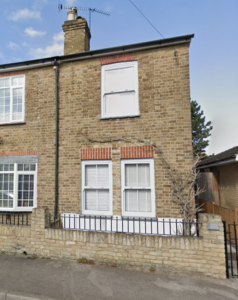
Property: 1900s semi-detached house in Addlestone, Surrey
Consultation with: Stephen Boniface
Key question: Is rising damp really common in old houses?
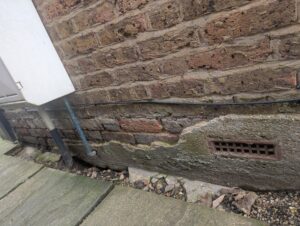
Symptoms Observed: Damp symptoms including mould, salt deposits and failing plaster on internal walls
Previous advice: Chemical damp proof course injection recommended by a contractor
Expertible outcome: Clear diagnosis plan before undertaking repairs

Case Details
Progressive damp symptoms had appeared in the house, including black mould, salt deposits and areas of plaster beginning to delaminate.
Ben had previously been advised to install a chemical damp proof course and was concerned this might not address the real cause of the problem.
He had encountered conflicting advice online and from contractors and was unsure what the correct treatment would be for a house built in the 1900s.
What happened
The consultation involved discussing the symptoms, reviewing the property context and identifying the most likely moisture sources affecting the building.
During the consultation, damp and period property specialist Stephen Boniface reviewed the symptoms Ben described and explained that identifying the moisture source was essential before undertaking any damp treatments, especially chemical DPC injection.
Stephen explained that older houses handle moisture differently from modern buildings and that similar symptoms can arise from several moisture sources. He noted that some modern damp treatments can trap moisture and worsen problems if the underlying cause is not understood.

Recommendations
The expert talked Ben through a structured approach to diagnosing the damp, explaining how to inspect likely moisture paths inside and outside the building and how to confirm the cause before undertaking repairs.
The consultation helped Ben focus first on investigating the building and documenting where damp was occurring rather than rushing into remedial work.
The expert explained that once the moisture source had been confirmed, repairs should be carried out using materials appropriate for a Victorian property to avoid trapping moisture in the structure. He then provided links for further details of what to use and where to source.
The Outcome
Ben left the consultation with a clear checklist to diagnose the cause of the damp, recommendations for appropriate repair materials and greater confidence about how to proceed.
Ben, “I am now fully equipped to move forward without the guesswork. I have a clear checklist to diagnose the damp cause and specific material recommendations.”
“It clicked during the consultation when I realised Stephen had done significant prior research on my specific property.”

Conclusions
Is rising damp common in old houses? The expert explained that true rising damp is often less common than people expect and that many similar symptoms in old houses are caused by other moisture sources or incompatible modern repairs.
Should I inject a chemical damp proof course in an old house? The expert explained that chemical DPC systems are almost never required as they do not address the underlying cause of damp if the moisture source has first been identified.